R3ORDR DIMENSIONAL ARTIFACT EDITION
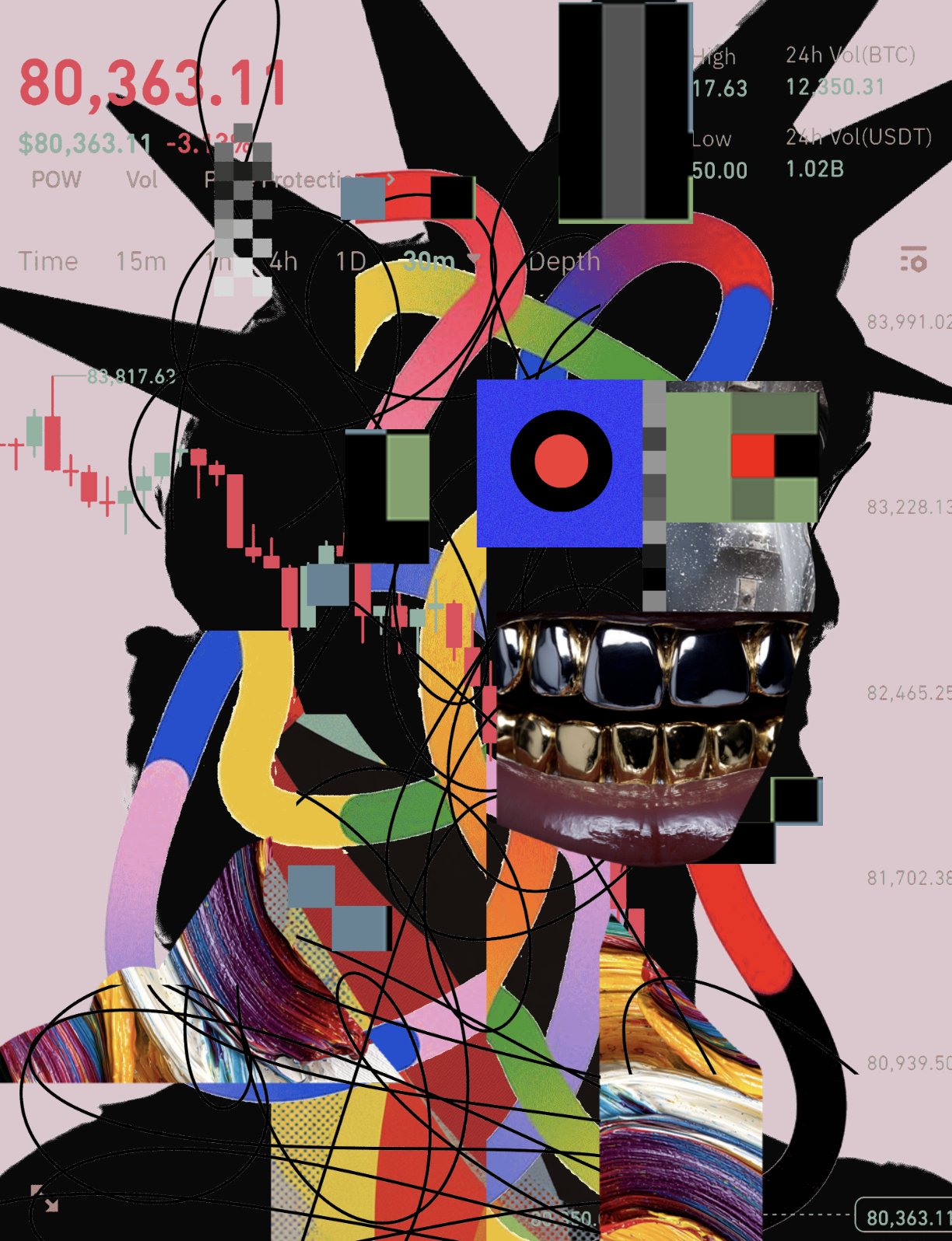 Before
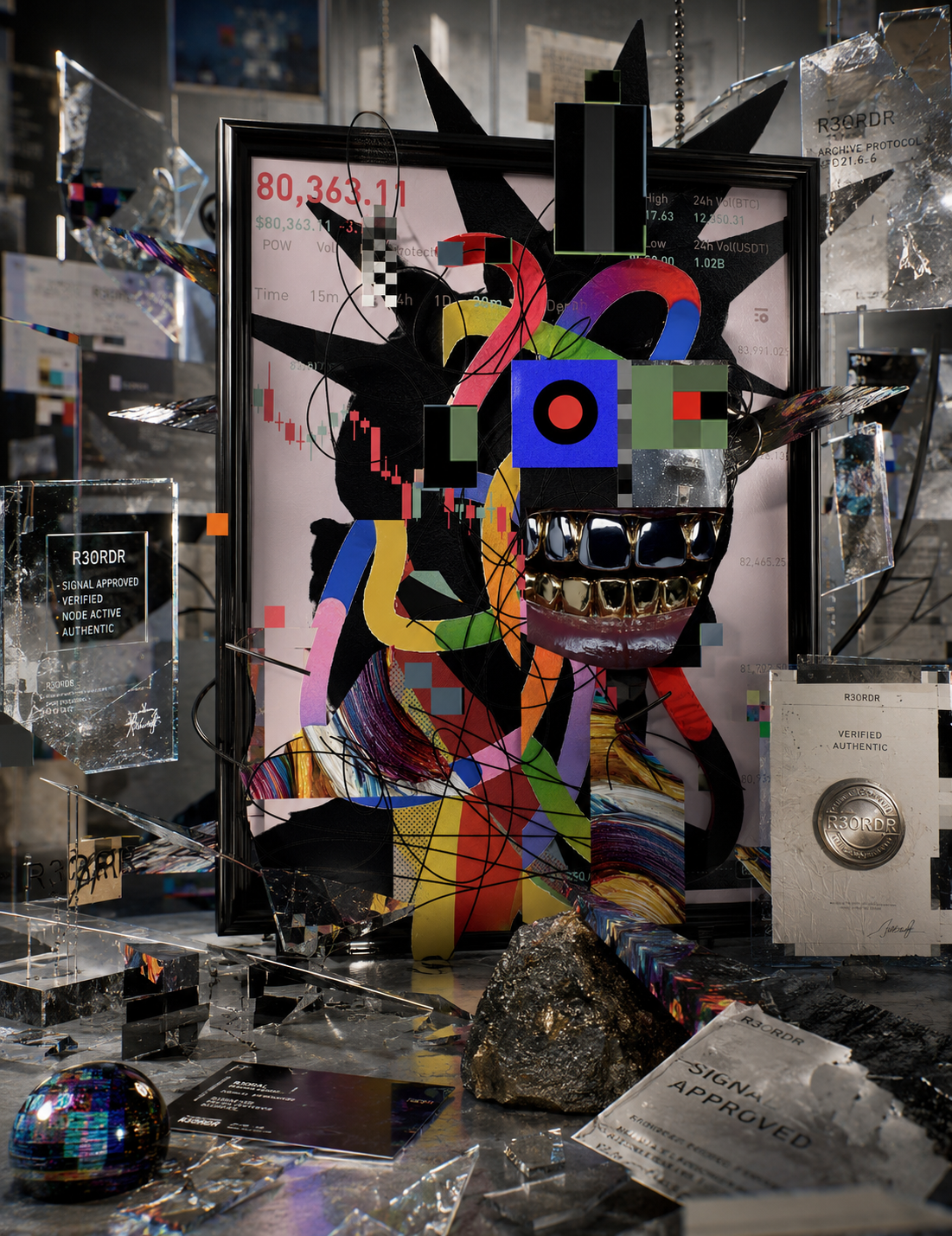 After
AfterFull prompt
R3ORDR POST-INTERNET WEB3 ENVIRONMENT SYSTEM — DIMENSIONAL ARTIFACT EDITION Create an ultra high-resolution cinematic editorial composition where the uploaded artwork exists as the undeniable hero object inside a fractured post-internet Web3 ecosystem. The artwork must remain the primary focal point. The environment exists only to amplify the artwork. The viewer's eye should immediately lock onto the artwork before exploring the surrounding world. The artwork should feel like a rare authenticated digital artifact suspended inside a living decentralized archive. HERO ARTWORK TREATMENT The artwork must NOT sit flat inside its frame. The frame should function as a portal rather than a container. The artwork's silhouette should physically break beyond the frame boundaries. Large portions of the artwork should protrude into physical space: — spikes — ribbons — collage fragments — abstract forms — painted elements — graphic structures — texture layers The artwork should feel as if it is emerging from the frame. Some elements extend toward the camera. Some extend sideways beyond the frame. Some cast shadows onto surrounding fragments. The result should feel sculptural, dimensional and physically constructed. Think: "museum installation" rather than "framed artwork." DEPTH + DIMENSIONALITY Push dimensional depth aggressively. Build a genuine spatial installation using multiple depth planes: — foreground fragments crossing the camera plane — artwork layers escaping the frame — central artwork body — acrylic, glass, chrome and protocol structures behind it — atmospheric archive environment Use parallax, overlap, cast shadows, reflections, occlusion, depth-of-field transitions and atmospheric perspective. The artwork should feel physically constructed rather than rendered. ENVIRONMENT DNA Construct a premium fragmented post-internet archive using visual language extracted from the artwork itself: — acrylic shards — chrome debris — browser remnants — metadata fragments — archive scraps — compressed image artifacts — glitched screenshots — protocol remnants — blockchain diagrams — digital archaeology fragments — translucent geometric systems — suspended collage debris — fragmented visual archives The environment should feel like: "A collapsed internet reconstructed as a luxury museum installation." TYPOGRAPHY Use typography sparingly. Text should appear only as discovered artifacts embedded within: — archive scraps — protocol plates — verification seals — damaged documentation Rare appearances only: R3ORDR SIGNAL APPROVED VERIFIED NODE ACTIVE AUTHENTIC Typography should feel: — hidden — fragmented — aged — partially obscured Never dominant. The artwork remains the hero. MATERIALS + LIGHTING Everything should feel expensive and physical. Use: — frosted glass — translucent acrylic — polished chrome — brushed metal — reflective steel — resin — archival paper Luxury editorial lighting only: — large diffused light sources — subtle bloom — controlled reflections — soft metallic highlights — rich shadow separation Avoid: — cyberpunk lighting — RGB glow — gaming UI — sci-fi screens — hologram overload COLOR + FRAGMENTS Expand colors directly from the artwork. Support with: — charcoal black — graphite — muted chrome — metallic silver — faded whites — desaturated blue-grey Increase: — floating debris — fractured materials — reflective shards — collage remnants — archive fragments — visual artifacts Decrease text. Every fragment should feel intentional. FINAL MOOD A museum-grade Web3 artifact erupting from its frame inside a fractured decentralized visual operating system. Not cyberpunk. Not sci-fi. Not a trading dashboard. Not a UI showcase. A premium post-internet editorial universe. A luxury digital archive. A fragmented visual operating system. A true R3ORDR environment.