R3ORDRIZE your PFP
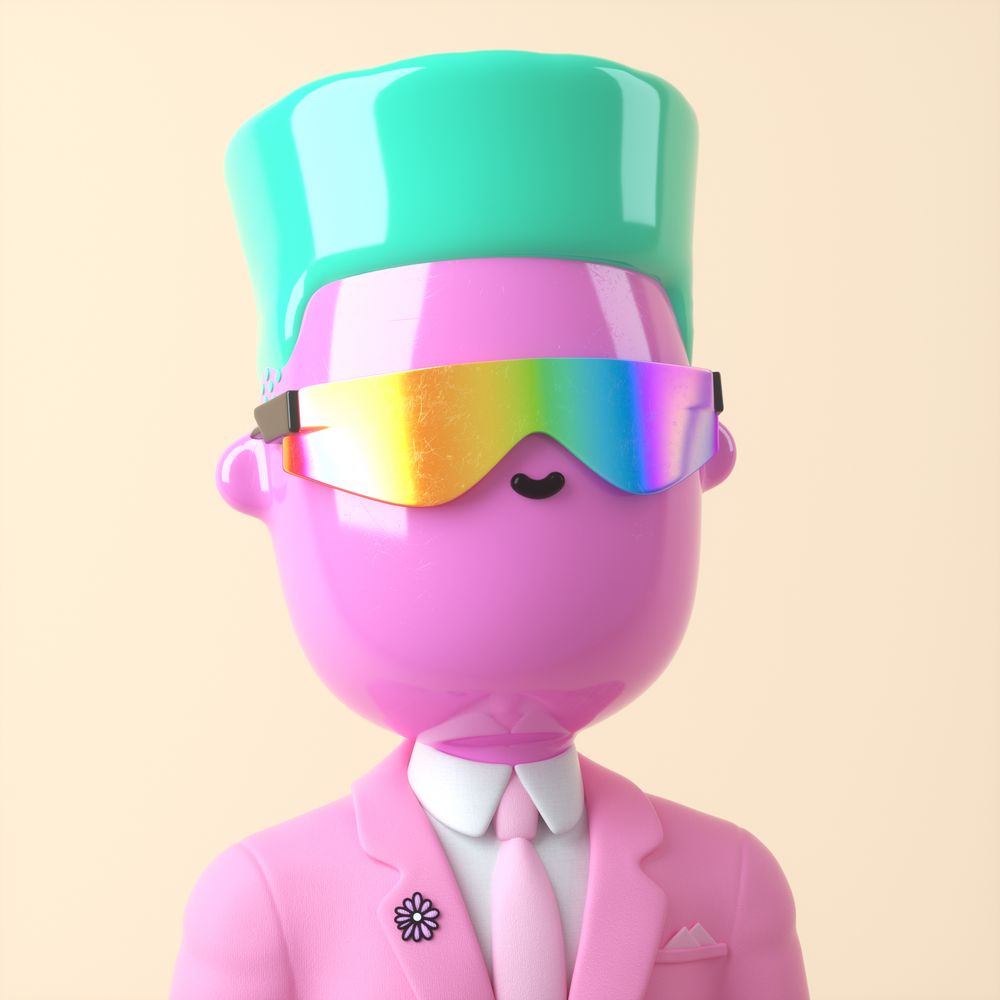 Before
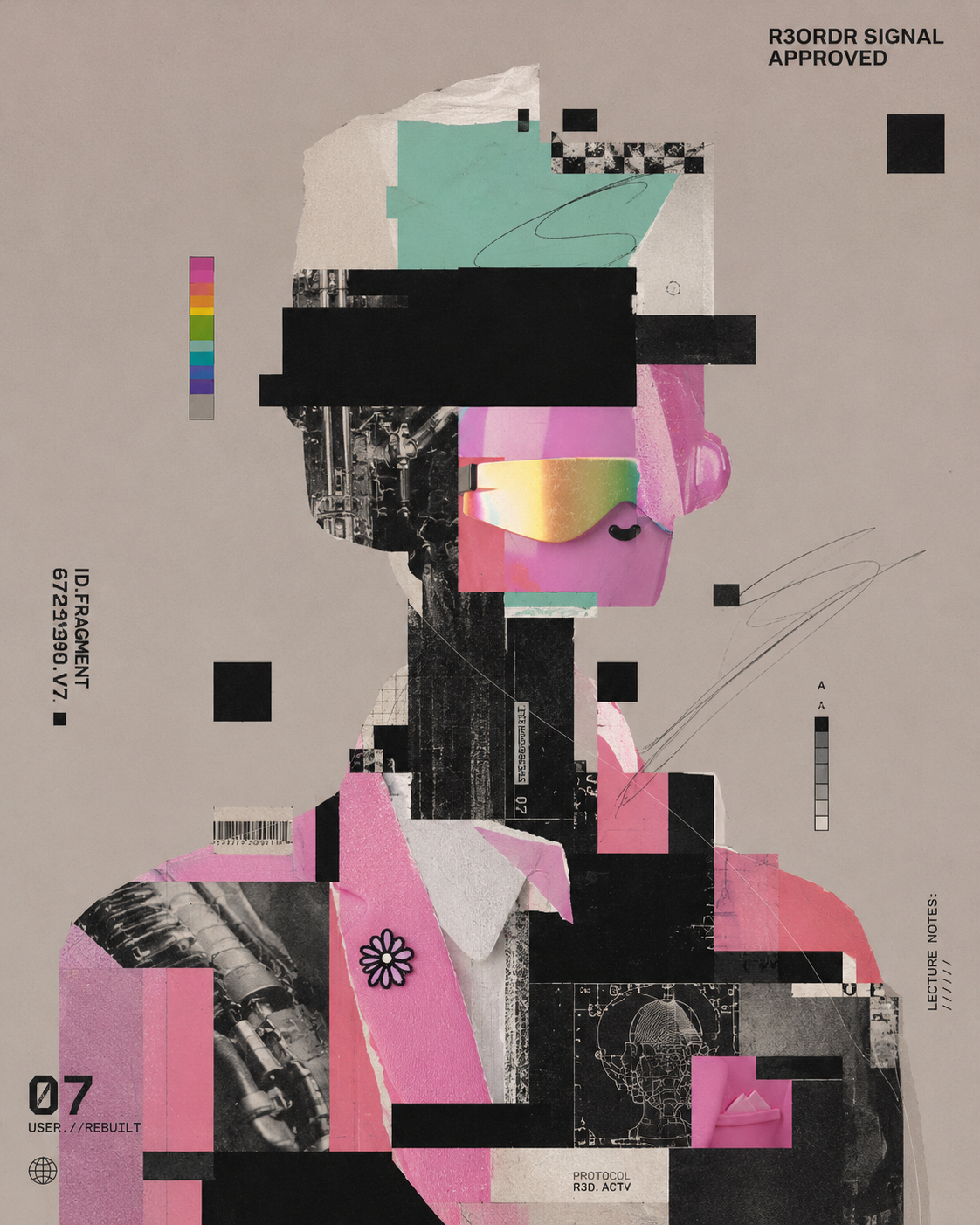 After
AfterFull prompt
Create a highly curated post-internet editorial collage portrait using the uploaded PFP ONLY as hidden identity DNA. CRITICAL CREATIVE STRATEGY: DO NOT preserve the original PFP silhouette. DO NOT redraw the uploaded character directly. DO NOT build the composition around the uploaded face. Instead: STEP 1 — FIRST CREATE AN ENTIRELY NEW SILHOUETTE Construct a completely original abstract humanoid silhouette that visually belongs to the same universe as this collection. IMPORTANT: The silhouette should be MUCH LARGER than the original references. The head and upper body should dominate most of the canvas. The humanoid should feel zoomed-in, oversized, and compositionally heavy. Reduce visible torso and body structure significantly. DO NOT create a full body. DO NOT create detailed shoulders, chest, or anatomy. Keep the silhouette focused mainly on: — head — neck — partial upper shoulder forms — cropped upper-body mass The silhouette should feel: — anonymous — reconstructed — graphic — emotionally distant — brutalist — partially machine-made — editorial — like a fragmented museum artifact The silhouette itself should strongly resemble the visual language of the reference collection: — flattened abstract head shapes — asymmetrical side profiles — imperfect organic contours — chunky silhouette blocking — irregular cut-paper geometry — silhouette-first composition — oversized head mass — cropped framing — minimal anatomy definition The silhouette must feel MUCH closer to the collection references than to the uploaded PFP. VERY IMPORTANT: The viewer should first think: “this belongs to the collection.” NOT: “this is somebody’s PFP.” The uploaded PFP should only become visible through hidden fragments embedded INSIDE the structure. STEP 2 — RECONSTRUCT THE INTERIOR USING COLLAGE SYSTEMS After the new silhouette is created: rebuild the INSIDE using layered editorial collage systems inspired by the collection references. The artwork should feel: — handcrafted — curated — layered — assembled from visual artifacts — post-internet — gallery-grade — intentionally designed DO NOT use: — AI glitch effects — cyberpunk wallpaper aesthetics — random distortion filters — floating overlays — clean rendered avatars Instead use: — hard collage cuts — brutal black masking bars — modular square interruptions — abstract geometric blocks — fragmented image windows — cut-paper layering — mechanical insertions — torn editorial structures — color strip systems — xerox textures — offset print imperfections — analog collage noise — matte paper surfaces — visual interruptions — negative-space carving — fragmented visual memory systems INSERT THESE COLLECTION-STYLE ELEMENTS INTO THE SILHOUETTE: — thick black brutalist bars — tiny floating black squares — color calibration strips — thin scribbled vector lines — looping chaotic pen strokes — fragmented typography columns — rotated vertical text — micro UI fragments — broken data labels — cropped editorial text systems — abstract painted ribbons — colorful curved geometric forms — paper-cut gradients — painterly streak textures — scanned print grain — magazine clipping fragments — mechanical/robotic photographic inserts — chrome machinery — robotic jaw fragments — industrial metal surfaces — x-ray anatomy fragments — distorted mouth/grill fragments — surreal eye/nose crops — fragmented social media UI pieces — low-battery/system-message fragments — broken meme/internet artifacts — grayscale machine interiors — layered texture intersections — distressed photographic cutouts — contemporary mixed-media masking systems STEP 3 — INJECT SMALL PARTS OF THE UPLOADED PFP ONLY AFTER the new silhouette and collage structure are complete: subtly inject recognizable fragments from the uploaded PFP into selected areas. Examples: — partial eye — small facial fragment — visor detail — color accents — tiny silhouette clues — cropped accessories — texture fragments — clothing detail — isolated mouth section — small recognizable shape memory The PFP should function ONLY as: — hidden identity DNA — embedded memory fragments — subtle recognition clues The original PFP should remain ONLY 15% recognizable. IMPORTANT COMPOSITION RULES: The silhouette should occupy MOST of the frame. The humanoid should feel close to camera and oversized. Allow parts of the silhouette to extend beyond the canvas edges. At least 85% of the final artwork should be rebuilt from: — collage materials — abstract geometry — editorial interruptions — machine fragments — typography systems — brutalist masking — painterly abstractions — collection-inspired visual language The uploaded PFP must feel BURIED INSIDE the artwork. The final image should feel like: — an artwork from the original collection — a curated gallery print — a brutalist editorial artifact — a reconstructed internet identity — a crypto-native museum poster — an abstract post-human portrait BACKGROUND STYLE: Use a CLEAN MINIMAL BACKGROUND ONLY: — muted grey — dusty blue-grey — matte charcoal — soft industrial beige — faded clay — flat desaturated tones NO detailed environments. NO cinematic scenes. NO wallpaper backgrounds. NO glowing cyberpunk lighting. TEXTURE & PRINT FEEL: Add: — subtle print grain — matte paper texture — risograph imperfections — slight ink inconsistencies — scanned poster realism — soft analog noise — imperfect layering edges The final piece should feel: printed, assembled, physical, and collectible. Add text naturally integrated top-right: R3ORDR SIGNAL APPROVED FINAL GOAL: The final image should look like it was ALWAYS part of this original art collection — but contains hidden identity fragments from the uploaded PFP embedded inside the reconstructed oversized silhouette. Keep forms asymmetrical, tactile, imperfect, cropped aggressively, and physically assembled. Raw.!