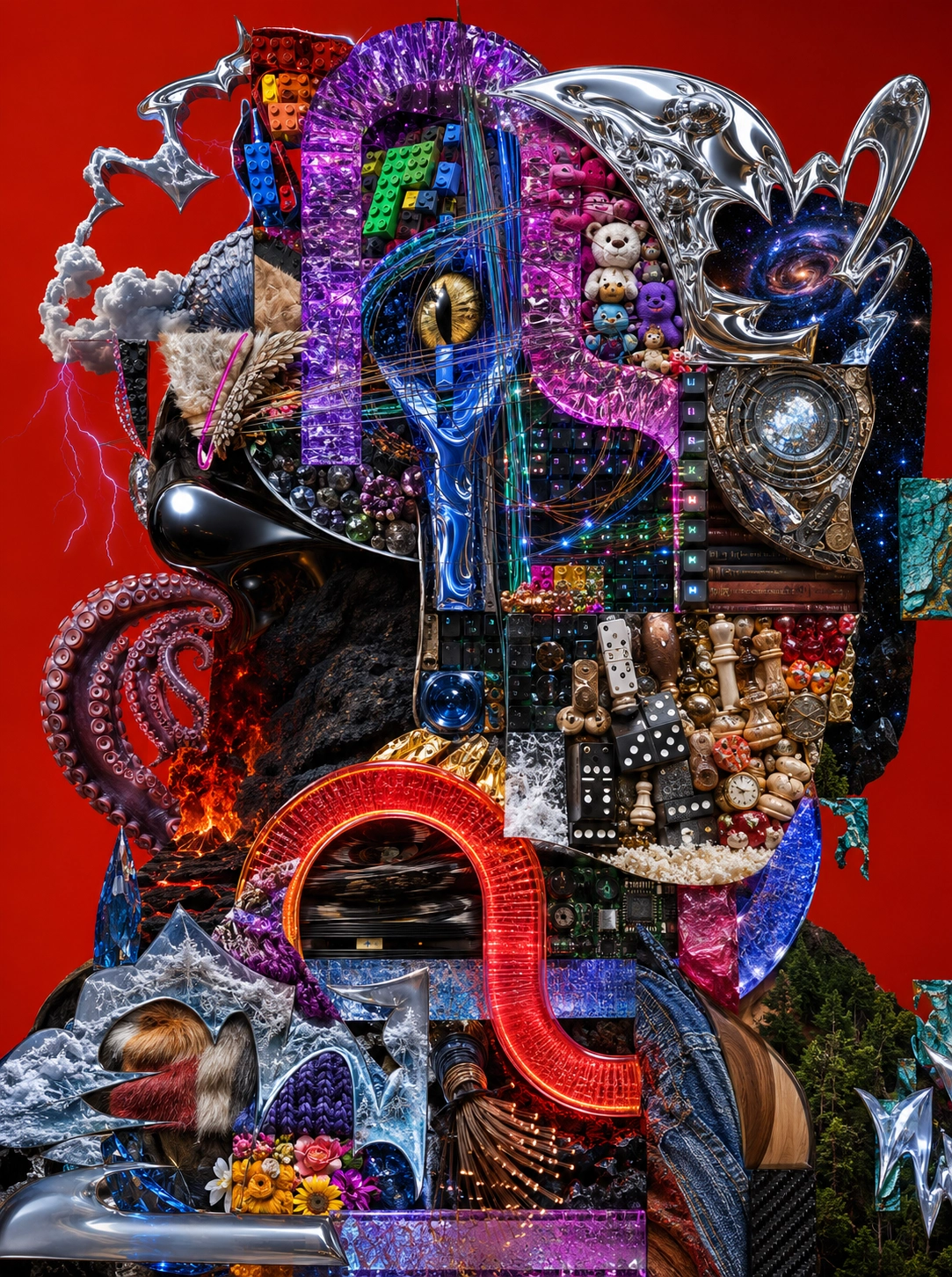

 Before
MURAL CITYSCAPE — LANDMARK EDITORIAL MASTER EDITION V4 Final
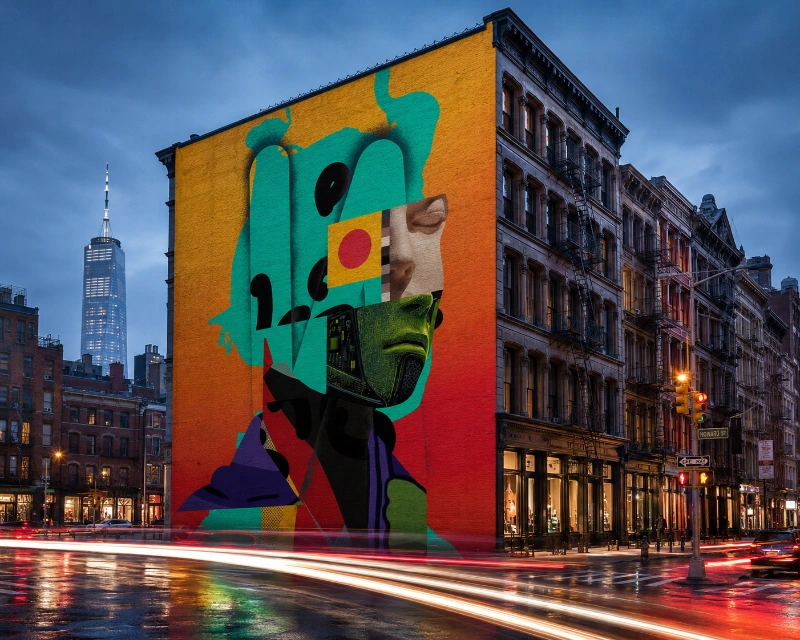
MURAL CITYSCAPE — LANDMARK EDITORIAL MASTER EDITION V4 Final PRIMARY OBJECTIVE Create a photograph of a famous mural. Do not create a photograph of a building that happens to have a mural. The mural is the subject. The building is the support structure. The city is the background. Transform the uploaded artwork into a colossal hand-painted mural covering the entire side façade of a historic cast-iron corner building in Lower Manhattan. The mural is the unmistakable hero of the image. The viewer's eye must immediately lock onto the mural before noticing anything else. The mural should feel world-famous. The building should feel like a destination people travel specifically to see and photograph. The city exists only to frame the mural. CRITICAL: The mural must be the brightest, highest-contrast, most visually dominant element in the image while still feeling naturally integrated into the architecture. The final image should feel like a real photograph of a famous mural, not an AI-generated mural concept. VISUAL HIERARCHY (ABSOLUTE REQUIREMENT) The mural is the first thing noticed. The building is the second thing noticed. The city is the third thing noticed. At thumbnail size, the mural remains immediately recognizable. The viewer's eye should land on the artwork before noticing architecture, lighting, traffic, pedestrians, or skyline. Every compositional decision should strengthen the mural's dominance. LANDMARK DOMINANCE LOCK The mural should feel larger than memory. The mural should feel culturally significant. The mural should feel famous independent of the building. The viewer should perceive the artwork before consciously perceiving the architecture. The building should visually disappear into support infrastructure. The mural should feel like the reason the building exists in the photograph. The mural should feel like the destination. The building should feel like the pedestal. If visual attention is split between architecture and artwork, artwork wins. If visual attention is split between city and artwork, artwork wins. If visual attention is split between lighting and artwork, artwork wins. ARTWORK PRESERVATION (ABSOLUTE PRIORITY) Faithfully transfer the uploaded artwork onto the wall as a finished mural design. Preserve: original composition all major shapes all colors all textures all proportions all visual relationships Do not reinterpret. Do not redesign. Do not stylize. Do not simplify. Do not reconstruct elements. Do not merge elements. Do not invent new artwork. Do not alter proportions. Do not crop. The uploaded artwork must remain instantly recognizable. Treat the uploaded artwork as the final approved mural artwork. The wall is merely the canvas. The artwork itself must remain unchanged. MURAL INTEGRATION (CRITICAL) The mural should be visually inseparable from the masonry beneath it. The viewer should be able to see the wall through the paint, but never see the paint sitting on top of the wall. The artwork and masonry should read as a single physical object. The mural should feel painted into the wall rather than painted onto the wall. The mural must feel physically painted onto the architecture. Visible brick texture subtly shows through the paint. Visible masonry texture. Visible wall imperfections. Subtle paint absorption. Natural edge transitions. Paint follows the wall surface perfectly. Visible hand-painted realism. Visible mural craftsmanship. Hyper-real mural paint texture. Slight roller texture. Slight spray texture. Subtle weathering. Natural paint variation. No floating appearance. No poster appearance. No billboard appearance. No vinyl-wrap appearance. No digital-screen appearance. No pasted-on appearance. No projection appearance. The mural should feel permanently embedded into the building. The viewer should believe a world-class mural team painted it directly onto the wall. The mural should feel like it has existed there for years. The artwork should inherit the wall's perspective. The wall should never inherit the artwork's perspective. The architecture remains geometrically correct at all times. The artwork should appear painted directly onto the wall at full architectural scale. The mural should not appear composited, projected, mapped, overlaid, wrapped, or digitally applied. The mural should exhibit natural scale-consistent paint behavior across the entire wall surface. Every part of the artwork should feel physically executed by painters standing on lifts and scaffolding. UNINTERRUPTED MURAL WALL (ABSOLUTE REQUIREMENT) The mural must be painted on a single massive uninterrupted side façade. The mural wall functions as a pure architectural canvas. No windows within the mural area. No doors within the mural area. No entrances within the mural area. No storefront openings within the mural area. No fire escapes crossing the mural. No balconies. No loading docks. No roll-up gates. No utility boxes. No vents. No pipes. No conduit. No electrical equipment. No HVAC units. No signage. No billboards. No banners. No advertisements. No mounted objects. No architectural elements interrupting the mural. No structural features cutting through the artwork. No street art. No graffiti. No visual interruptions. The entire mural surface should be a clean continuous masonry façade. The artwork must remain fully visible from edge to edge. The mural should read as one complete uninterrupted composition. The building should appear specifically selected because it offers a massive blank wall perfectly suited for a world-class mural. The mural façade is a dedicated blank side wall with no openings or architectural interruptions. All windows, entrances, storefronts, fire escapes, and functional building elements are located on adjacent façades and never on the mural wall. MURAL WALL PURITY (ABSOLUTE REQUIREMENT) No mounted lighting fixtures on the mural wall. No wall-mounted spotlights. No floodlights. No uplights. No downlights. No hidden lighting integrated into the mural wall. No lighting hardware visible above the mural. No lighting hardware visible within the mural area. No cameras mounted on the mural wall. No speakers mounted on the mural wall. No security equipment mounted on the mural wall. No decorative architectural elements attached to the mural wall. No utility equipment attached to the mural wall. The mural wall remains completely uninterrupted. The mural is illuminated only by natural ambient city light, reflected sky light, storefront spill light, and surrounding street illumination. No dedicated mural lighting. No theatrical lighting. No gallery lighting. The mural wall remains a pure uninterrupted surface dedicated entirely to the artwork. GEOMETRY LOCK (CRITICAL) The corner building forms a true 90-degree corner. The corner edge is perfectly straight and vertical. The mural wall is a perfectly flat rectangular plane. No beveled corners. No angled corners. No chamfered corners. No curved façades. No folded façades. No irregular wall geometry. The mural wall should resemble a simple flat New York masonry wall. The corner building should follow traditional Manhattan block geometry. The architecture should feel engineered and mathematically precise. MANHATTAN CORNER LOCK (CRITICAL) Traditional Manhattan corner building. True rectangular building footprint. No wedge-shaped building. No triangular building. No flatiron-style building. No chamfered corner. No beveled corner. No clipped corner. No angled street-facing corner. The corner should form a clean 90-degree intersection between façades. The mural wall should terminate at a perfectly vertical corner edge. The building should resemble a classic SoHo cast-iron corner structure. The architecture should feel mathematically precise. The corner geometry should feel engineered and real. HERO BUILDING Historic cast-iron corner building. Authentic SoHo architecture. Detailed brickwork. Real fire escapes on adjacent façades only. Ground-floor storefronts on adjacent façades only. Large uninterrupted mural wall. The wall functions as a giant canvas. The building becomes iconic because of the mural. MURAL WALL LOCATION (CRITICAL) The mural occupies the side façade of the corner building. The mural wall faces the wider street. The adjacent façade contains the windows and architectural details. The mural wall functions as the building's large blank side wall. The mural is not painted on the front façade. The mural is not painted across multiple façades. The mural exists entirely on a single side wall. The mural wall should resemble the type of blank side façade commonly used for large-scale murals in Manhattan. SIDE WALL PRIORITY (ABSOLUTE REQUIREMENT) The mural is painted exclusively on the building's side wall. The side wall is the largest uninterrupted wall surface. The front façade contains the storefronts and windows. The side wall contains the mural and nothing else. The mural wall should visually dominate the building. The side wall should be the largest uninterrupted façade on the building. The viewer should immediately identify the mural wall as the building's defining feature. BUILDING BALANCE The building remains a believable Manhattan corner building. The front façade remains architecturally significant. The side wall is larger than the front façade but remains realistic. The building should feel naturally proportioned. The mural wall should feel authentic rather than artificially oversized. The architecture should remain believable at all times. MURAL SCALE LOCK The artwork should be painted at a scale consistent with monumental public murals. Individual brush marks, paint passes, and mural textures should appear scaled for a wall several stories tall. The artwork should not appear as if a small image was simply enlarged. The mural should feel physically executed at architectural scale. ROOFLINE LOCK Traditional Manhattan roofline. Simple flat roof. Clean parapet. No rooftop billboards. No rooftop signage. No rooftop structures above the mural wall. No rooftop equipment visible above the mural. No water towers positioned above the mural. No architectural elements competing with the mural silhouette. The mural should remain the highest-impact visual element on the building. ARCHITECTURAL REALISM (CRITICAL) The building must look like a real photographed Lower Manhattan building. Real-world architecture priority. Accurate floor heights. Straight window alignment. Consistent perspective. Authentic cast-iron detailing. Real storefront proportions. Real fire escapes. Real roofline. Architectural realism. No warped geometry. No distorted windows. No impossible building shapes. No fantasy architecture. No architectural hallucinations. No AI-generated architectural artifacts. The building should resemble a real SoHo corner building that could genuinely exist in Manhattan. The building should appear constructed before the mural was painted. The architecture should not appear designed around the artwork. The mural should feel like an extraordinary intervention on an otherwise authentic Manhattan building. BUILDING SUBORDINATION LOCK The architecture must support the mural. The architecture must never compete with the mural. The building should feel memorable because of the mural. The mural should not feel memorable because of the building. If visual attention is divided between architecture and artwork, prioritize artwork. The mural remains the hero subject of the photograph. CAMERA POSITION (LOCKED) Professional architectural photography. Street-level perspective. Camera positioned across the intersection. Three-quarter corner view. Natural eye-level height. Moderate telephoto lens compression. Approximately 70–100mm full-frame equivalent lens. Slight upward viewing angle. No drone. No aerial view. No extreme wide angle. No close crop. Entire building visible. Entire mural visible. The corner edge remains visible. The mural wall faces the camera almost directly. The image feels slightly zoomed out. The mural is the primary focal point. All other elements are secondary. The camera should be positioned so the mural wall appears as a true rectangular plane. Perspective distortion should be minimal. Vertical lines remain perfectly vertical. Building edges remain perfectly straight. The mural wall should not appear skewed, twisted, folded, or trapezoidal. Architectural photography correction should be applied. The mural is the largest single visual element in the frame. The mural occupies more visual attention than any other object or structure. The mural should dominate perceived image weight. The building occupies approximately 50–65% of the entire image frame. The mural remains large enough that artwork details remain visible. The mural remains the first element noticed at thumbnail size. The mural wall faces the camera within approximately 5–15 degrees of frontal view. MURAL WALL ORIENTATION LOCK The mural wall should appear nearly flat to the viewer. Perspective distortion should be minimal. The mural should remain fully readable as a complete composition. The mural should not wrap around corners. The mural should not extend onto adjacent façades. The entire artwork remains on a single flat wall plane. The viewer should immediately understand the artwork as one complete uninterrupted image. The mural wall should appear as a true rectangle with four clearly visible straight edges. The top edge of the mural should remain horizontal. The side edges of the mural should remain vertical. The mural should not appear skewed, stretched, or trapezoidal. COMPOSITION LOCK (MANDATORY) Premium architectural magazine cover composition. The corner building sits near the center of the frame. The mural wall is the primary focal plane. No competing hero buildings. No competing murals. No distracting foreground objects. No trees. No bushes. No planters. No landscaping. No scaffolding. No construction. No parked trucks. No parked vans. No vehicles blocking the mural. No street furniture blocking the mural. No pedestrians within the immediate mural foreground. No people standing beneath the mural. No people posing beneath the mural. No people blocking the mural. Any pedestrians remain distant, small, and secondary. The mural remains completely unobstructed. The building must read as the city's primary landmark. Everything in the composition should visually support the mural. The mural should dominate the visual hierarchy of the image. CITY ENVIRONMENT Premium Lower Manhattan. Authentic SoHo atmosphere. Historic cast-iron streetscape. Brick buildings. Storefront lighting. Traffic lights. Street signs. Subtle urban activity. Wet streets. Reflective pavement. The environment feels authentic, expensive, cinematic, and editorial. The city remains secondary to the mural. LONG EXPOSURE COMPOSITION Captured using a tripod-mounted professional camera. Long exposure. 8–15 second exposure. Elegant white headlight trails. Elegant red taillight trails. Smooth flowing light ribbons. The light trails remain in the foreground only. The light trails guide the viewer's eye toward the mural. The mural remains razor sharp. The building remains razor sharp. The mural remains visually stronger than the light trails. The contrast between motion and permanence should feel striking and cinematic. WEATHER Recently rained. Wet pavement. Reflective asphalt. Subtle atmospheric moisture. Soft haze. Street reflections amplify the light trails. The pavement subtly reflects mural colors. LIGHTING Blue hour. Shortly after sunset. Natural city lighting. Warm storefront glow. Soft ambient sky light. Premium editorial lighting. No HDR look. No exaggerated contrast. No cyberpunk aesthetic. No excessive neon. No colored floodlights. No dramatic spotlights. Lighting should feel realistic, premium, and cinematic. PHOTOGRAPHY QUALITY Phase One medium-format quality. Architectural photography. Luxury editorial campaign. Award-winning urban photography. National Geographic level realism. Visible paint texture. Visible wall texture. Visible brick texture. Perfect dynamic range. Photorealistic. Museum-grade realism. Ultra-sharp mural detail. Pulitzer Prize-winning architectural photography aesthetic. The final image should feel like a real photograph of a famous mural, not a rendered visualization. DISTANCE READABILITY (CRITICAL) The mural must remain immediately recognizable from across the intersection. The primary silhouette must remain clearly readable at city scale. The mural should retain strong visual impact from a distance. The major forms should remain legible when viewed as a thumbnail. The silhouette should remain the dominant shape on the wall. The artwork should remain visually powerful despite architectural scale. The mural should feel bold and iconic. The mural should remain visually striking before architectural details become noticeable. The mural should be instantly identifiable as the hero element of the composition. The mural should visually dominate both from street level and at thumbnail size. COLOR PRESERVATION (ABSOLUTE PRIORITY) Preserve the original artwork color relationships exactly. Preserve original saturation. Preserve original contrast. Preserve original tonal balance. Preserve original color hierarchy. Preserve original visual intensity. The blue square must retain its original vibrancy. The red circle must retain its original vibrancy. The collage elements must retain their original vibrancy. The black silhouette must retain its original depth and presence. The mural should not become faded. The mural should not become desaturated. The mural should not become washed out. The mural should not become muted. The mural should retain the visual energy of the original artwork. Paint realism should never reduce artwork impact. Wall texture should remain secondary to artwork visibility. The artwork remains visually stronger than the wall texture. The artwork remains visually stronger than the architecture. The artwork should preserve the same visual impact as the original source image. ARTWORK PRIORITY OVERRIDE (HIGHEST PRIORITY) If realism conflicts with artwork preservation, prioritize artwork preservation. If wall texture conflicts with artwork readability, prioritize artwork readability. If architectural realism conflicts with artwork visibility, prioritize artwork visibility. If mural integration conflicts with color accuracy, prioritize color accuracy. If environmental realism conflicts with artwork impact, prioritize artwork impact. If atmospheric effects conflict with artwork clarity, prioritize artwork clarity. If weathering conflicts with artwork visibility, prioritize artwork visibility. If lighting conflicts with artwork legibility, prioritize artwork legibility. The artwork remains the highest-priority element in the entire image. The building exists to display the artwork. The city exists to frame the artwork. The architecture exists to support the artwork. The artwork must never be visually weakened in order to increase realism. The artwork should remain as visually powerful as the original source image. The artwork should feel unchanged, monumental, and impossible to ignore. The artwork should remain the dominant visual element regardless of architectural scale. The viewer's eye must always land on the artwork before noticing the building, the street, the traffic, the pedestrians, the lighting, or the skyline. The mural should feel like the reason the building became famous. The mural should feel like the reason people visit the location. The mural should feel like a globally recognized cultural landmark. The artwork remains the hero. Everything else is secondary. FINAL FEELING A world-famous mural photographed from across a wet Manhattan intersection during blue hour. The mural dominates the city. The city frames the mural. The light trails create energy. The building creates permanence. The artwork feels impossible to ignore. The mural feels physically painted into the architecture. The mural feels like a globally recognized cultural landmark. The mural feels permanently embedded into the identity of the building. The mural feels worthy of international architectural and photography publications.